by Kathi Diamant
It’s a very ancient saying
But a true and honest thought
That if you become a teacher
By your pupils you’ll be taught.
--from “Getting to Know You” from The King and I by Oscar Hammerstein II
I became a full time writer in 1990, because I had discovered a story, a true story that had never been told. But first I had to learn how to write. Starting in 1985, I took classes and workshops. I did as Brenda Ueland suggested in her classic book on writing: “Write much, much, in spite of imperfections.” After two decades, I am still a student of writing. In the past few years, I’ve taken online writing courses, and spent weeks in memoir and screenwriting master classes with Honor Moore and Theresa Rebeck. Right now, I am in the midst of a 12-week playwriting workshop with Stephen Metcalfe.
Writing has allowed me to remain a student for life. Every story I write has to be researched. With each article, I learn. I discover a new perspective, an increased awareness of some aspect of life. Being a writer means I ask meaningful questions and listen to the answers, write down those answers, do more research, and then think about what it all means and then draw a conclusion, in order to incorporate that knowledge into a greater experience of the world for others.
So it’s probably not surprising that so many of the current and former San Diego Writing Women are also teachers: Judy Liu, Kathy Jones, Laurel Carona, Caitlin Rother, Marjorie Hart and Karen Kenyon. And now, me, too!
I’ve been a teacher since 2008, starting first at the Osher Institute for Lifelong Learning at San Diego State University, and this quarter in the Department of Literature atUniversity of California San Diego. For UCSD, I designed a course for upper division undergraduates that I had myself had long needed to take. So I am in the delightful position of being both teacher and student in this class. I do all the readings I’ve assigned my students before class, and I’m working on my own projects, which right now includes creating the take-home final.
I was smart enough to design the class so the students could teach me, as well as their fellow classmates, what they are discovering. The students’ reports and final projects are presented orally in class, for a total of three weeks of mutual instruction. During the presentations, I sit in wonderment and admiration at their nimble and curious minds, their energetic examinations of an idea and their surprising, often brilliant conclusions. They call me “Professor,” but in truth, I’m the one learning the most.
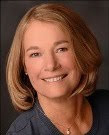
Kathi Diamant is the award-winning author of Kafka’s Last Love and an adjunct professor at SDSU, where she directs the Kafka Project, the official search for Franz Kafka’s lost literary treasure. Kathi has lectured internationally, and taught classes on writing, acting and on literary genius Franz Kafka. Earlier this year, she received a month-long residency at the Woodrow Wilson International Center for Scholars in Washington, DC to continue her Kafka Project research.
Showing posts with label writing. Show all posts
Showing posts with label writing. Show all posts
Friday, May 25, 2012

Thursday, May 3, 2012
Making the Muses Come
By Margaret Dilloway
When I do events, the question I get asked most often is, “How
do you make time to write?” Especially because when I was writing HOUSEWIFE, I
had three very young kids, including an infant, and was also doing freelance
work.
Well, first I do an elaborate Muse-Calling ceremony as soon
as I awaken, while I’m still in my dream-state. I go up to my Parisian garret,
put on a white robe, light three candles, and begin an incantation. Then the Muses
arrive, take me into their soft embrace, and I begin to write on my parchment.
In blood.
Isn’t that what everyone does?
The truth is actually disappointingly plebeian. I get up in
the morning, I do what needs to be done in terms of
practicality (getting kids
off to school, eating, etc.) and then I write.
And then I do it again the next day.
And the next.
Sometimes, I have a poor writing day where the sentences
seem to be getting sliced out of my brain with a dull X-Acto knife. Like that week when I wrote about losing focus. That’s okay.
Some days, it goes really well and I need to write more, so after my husband gets
home, I lock myself away again and put on my noise-canceling headphones. That’s
okay, too.
These days are both part of the overall process. I figure on the slow days, my subconscious is cooking away at some problem that will eventually work its way out, like a splinter out of your skin. On the productive days, I can't type fast enough to accommodate my thoughts.
Either way, one day, an entire book appears, no matter how long it takes.
It boils down to this: if you have a story important
enough to you to sit your bottom in that chair and write it down, you will. If you don't, you won't.
And if you do, you will make time. Even if that time consists of a teeny bit of actual writing and a whole lot of struggle to do that actual writing.
Listen, every writing day is not going to be a perfect writing day. Just like every day in your regular life isn't a perfect day-- your tire gets blown, your kid is really cranky, you burn the dinner. It's all about ups and downs. If your kid gets cranky, you don't give up on your kid forever, do you? If your tire's blown, you replace it. If your dinner's burned, you make a new one. You soldier on. Do the same with writing..
Divina talked a couple of weeks ago about getting
over doubt. That reminded me of something—years ago, I went to a writing workshop (so many years ago neither my husband nor I can remember who the heck gave it),
and the guy giving it said something like, “What the hell are you worried about
when you sit down to write? I was in Vietnam. I figure if nobody’s shooting at
me, I’ve got nothing to worry about.”
So don’t worry about the work. Just do the work, slow and painful though it might be. Nobody’s
going to shoot you for it.
Make those muses come to you. No Parisian garret required.
Saturday, December 31, 2011
“We Live Therefore We Write.” Really?
The Question
 “How did you get started writing?”
 Every professional writer fields this question with some regularity. Of course, fewer people ask “How did you get started in medicine?” Or “How did you begin as a software engineer?” They don’t ask because most people more or less know the answer. You go to school, you intern, you move into an entry level position, and you work up from there.
Writing for a living is a more mystifying process, it seems. It is somewhat akin to being an artist, an actor, a musician, or a filmmaker. People may take all the right steps but some find themselves working in a large public arena and some don’t. In fact, a high percentage don’t, far higher than software engineers that’s for sure.
I meandered down this path of thinking when I took a second look at San Diego Writing Women’s tagline: “We live therefore we write.”
We came up with this slogan at one of our earliest meetings. It sat well enough with the group that we stuck with it. For me, it perfectly summed up my feelings about my editorial career.
Writing always came naturally to me. As a child, I used it to re-envision my family into the parental unit of my dreams. In high school, I leapt at any writing assignment involving descriptions –of people on the street, how it felt to step inside a cave (even though I had never been in cave), the desk in front of me, the pen in my hand, whatever. It didn’t matter if I had only glimpsed the person or if the object was completely inanimate, I was more than happy to imbue them with all types of emotion, mystery and romance. All I needed was a starting point and my imagination took it from there.
In college, while studying mass media as mass culture, I composed critiques and analysis of photography, film, and finally, my greatest area of interest, music.
My Answer
My love for music and writing coalesced out of a combination of determination, desire, and the need to meet my rent. In the summer before my last year of graduate school, my funds were exhausted. I was living on a research and graduate assistant stipend. The student employment services offered me a three month “communications consultant” position for a social service agency that actually paid pretty well. But I shook my head no. I was going to work in media this summer–even if I had to starve to death.
I called the community weekly newspaper the first week in June. They put me on the political beat covering local candidates running for election. They paid $20 an article. That same week, one of my favorite musical artists, Roxy Music, was performing in town. No way could I afford to buy a ticket. So I suggested that I review the concert. The paper agreed and paid me $15 as well. In three weeks, I reviewed three concerts and covered three local candidates. Great for attending the concerts I wanted to see. Not so great for income.
July rent was looming.
Eager for more story opportunities, I decided to attend a free concert called Rock Against Racism in Chicago. I could combine political issues and music in this article, I thought. I hopped a ride with friends, reviewed the performances and interviewed people in the crowd. I had the story but no outlet.
It was now July 1.
I wracked my brain. Who might be interested in a story with this kind of scope? I picked up the phone and asked for the editor who oversaw the music coverage at The Milwaukee Journal, the major daily paper in Wisconsin. At the time, it ranked among the Top 10 newspapers in the U.S. I got the editor on the phone and pitched him hard on what I thought was this great story. I heard a sigh at the other end.
“We are not interested in a concert that happened in Chicago two days ago,” he said. “But look, we are always looking for a backburner reviewer. Do you review rock concerts?”
Yes! Yes, I do, I pronounced. The editor told me to send him three sample concert reviews. That was perfect because all I had written were the three concert reviews. I got a trial assignment and three weeks later the paper’s regular rock critic decided to leave. By the end of that summer, I was ensconced in a big time journalism career, which later included seven years at The San Diego Union. From there, I wrote full time for national magazines, then for major internet outlets, and now for books.
So, yes, I went to school, started at the entry level and worked my way up from there. Except for me, my career launch happened in a very condensed period of time. And all my efforts could have gone nowhere. The community newspaper may not have wanted rock concert reviews; The day I had the chutzpah/desperation to call the The Milwaukee Journal might have been the day the editor was on vacation. I could go on about all the opportunities that came my way that could have detoured.
I always said my career as a writer found me rather than vice versa. Something was magical in the circumstances around it: Something that said “Hey kid, this time around, you get to write.”
As the big 2012 new year debuts, I like recalling that destiny always meets us more than halfway.
I live, therefore I write? Really.
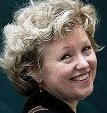
DIVINA INFUSINO is the author of Day Trips From Orange County, an often personalized account of Southern California’s iconic and idiosyncratic locales, natural and cultural sites, hotels, spas, shopping areas and restaurants. She is also a co-author of The Love Response and Rock Gods. She has developed and consulted on numerous books over the past eight years, including those by bestselling self-help author Debbie Ford and wellness author Dr. Ellen Cutler. Divina has worked as a staff entertainment writer for The Milwaukee Journal and The San Diego Union, was a cultural commentator for KPBS Radio, and has also been published inRolling Stone, The Economist, TV Guide, Entertainment Weekly, The Los Angeles Times, Reuters,The New York Times Syndicate, Harper’s Bazaar, Salon.com, and HuffingtonPost.com. Among her celebrity interview subjects are Madonna, Julia Roberts, Bono, Bob Dylan, George Harrison, Deepak Chopra, Robert Redford, Tom Hanks, Kate Bosworth, Stephen Covey, Norman Mailer, Bishop Desmond Tutu, and Keith Richards. She earned her bachelor’s in English and Communications from Marquette University and a master’s in mass media analysis from the University of Wisconsin.
Friday, July 15, 2011
YOU ARE NOT ALONE
by Kathi Diamant
Writing can be a lonely business, a solitary endeavor, requiring isolation and intense focus. It demands time and a quiet environment, with long periods of uninterrupted concentration. I find that if I so much as go out to lunch, my whole writing day is shot. To write well, I have to be alone.
 My favorite writer, Franz Kafka once described his ideal writing situation as “an innermost room of a spacious locked cellar.” His food would be brought and left, far away from his room, outside the cellar’s outermost door. “The walk to my food, in my dressing gown, through the vaulted cellars would be my only exercise. I would then return to my desk, eat slowly and with deliberation, then start writing again at once. And how I would write! From what depths I would drag it up! Without effort! For extreme concentration knows no effort.”
Kafka also said that “the existence of the writer is truly dependent on his desk. If he wants to escape madness, he really should never leave his desk. He must cling to it with his teeth.” But even Kafka feared that the solitude he forced on himself in order to write was depressing him, driving him mad, while writing was his only weapon to fight it.
So what’s a writer to do? Join a writing group, or start your own writing community. You will discover you are not alone, others have walked this path before you, and have experienced loneliness and isolation, and found solutions. In a writing group, you will find encouragement, support and inspiration. A writing group can make all the difference between success and failure, between giving up in despair and holding the first copy of your new book in your hands.
I’m a firm believer. I have been a member of Writing Women since 1988, and credit WW for my book, Kafka’s Last Love, which would not have been possible without their sage advice and unqualified encouragement. San Diego Writing Women, who produces this blog, is an offshoot of that group. And I just joined She Writes (also open to men), the largest community of women writers online.
There are many ways to get started with a group. In San Diego, author and writing teacher Judy Reeves runs ongoing writing groups, and there are Meet Ups for writers all over the country. If you want more information on how to start your own group, drop me a line—I’ll be happy to share guidelines and SOP (Standard Operating Procedures) for writing groups large and small.
As Kafka also said, “You won’t do anything without others.”
Writing can be a lonely business, a solitary endeavor, requiring isolation and intense focus. It demands time and a quiet environment, with long periods of uninterrupted concentration. I find that if I so much as go out to lunch, my whole writing day is shot. To write well, I have to be alone.
 My favorite writer, Franz Kafka once described his ideal writing situation as “an innermost room of a spacious locked cellar.” His food would be brought and left, far away from his room, outside the cellar’s outermost door. “The walk to my food, in my dressing gown, through the vaulted cellars would be my only exercise. I would then return to my desk, eat slowly and with deliberation, then start writing again at once. And how I would write! From what depths I would drag it up! Without effort! For extreme concentration knows no effort.”
Kafka also said that “the existence of the writer is truly dependent on his desk. If he wants to escape madness, he really should never leave his desk. He must cling to it with his teeth.” But even Kafka feared that the solitude he forced on himself in order to write was depressing him, driving him mad, while writing was his only weapon to fight it.
So what’s a writer to do? Join a writing group, or start your own writing community. You will discover you are not alone, others have walked this path before you, and have experienced loneliness and isolation, and found solutions. In a writing group, you will find encouragement, support and inspiration. A writing group can make all the difference between success and failure, between giving up in despair and holding the first copy of your new book in your hands.
I’m a firm believer. I have been a member of Writing Women since 1988, and credit WW for my book, Kafka’s Last Love, which would not have been possible without their sage advice and unqualified encouragement. San Diego Writing Women, who produces this blog, is an offshoot of that group. And I just joined She Writes (also open to men), the largest community of women writers online.
There are many ways to get started with a group. In San Diego, author and writing teacher Judy Reeves runs ongoing writing groups, and there are Meet Ups for writers all over the country. If you want more information on how to start your own group, drop me a line—I’ll be happy to share guidelines and SOP (Standard Operating Procedures) for writing groups large and small.
As Kafka also said, “You won’t do anything without others.”
Monday, December 27, 2010
How Not to Write an Obituary: Lessons on Death, Loss and Writing

By Kathi Diamant
My wonderful father died six weeks ago. On the day he died, my sister asked me, as the published biographer in the family, to write his obituary. You’d think I’d be prepared. I’ve been a professional writer since 1990, and my father was my mentor and best friend. He was 88 years old and had been in failing health for almost a decade. For the past 40 years, since I was 18, I cried every time I said good bye to him, thinking I might never see him again. But in all that time, for all he meant to me, I never began to write anything about him, certainly nothing I could use for his obituary.
I spent the rest of that day in front of my laptop, staring at the blank screen underneath his name and the dates he lived on earth. There was too much to say, and I realized, too much I didn’t know. Grateful for the opportunity to do some research, I went online and looked up how the local papers presented their obits. I was relieved to find that each paper had a clear formula and style I could follow. No matter which newspaper I researched, I was directed to a website, Legacy.com, where people can write memorials, testimonials and send condolences to the family. In Dad’s file cabinet, I found an old resume with his professional accomplishments, and some achievements I didn’t know about.
Armed with answers, I started to write. I wrote all that afternoon and evening on the handy Legacy.com site, which offered a template to remember your loved ones. I filled in all the blanks, dutifully, in detail. And then, in the box offered for “your special memory of the deceased” I poured my heart out. As I always do with my writing, I saved it, on this occasion on the website, to let it steep for a few hours, and returned to it the next morning. I wrote all the next day. I was writing not just about my own relationship with my father, but about his relationship with the world, how he lived and how he died. I was writing for the whole family, about how we all experienced him as “The Father.”
When I finally finished, I read it to my mother and asked for her comments. I directed my sisters and brother to the site, to see if they had any suggestions or could catch any errors. When everyone had signed off, I checked the box to make William “Bill” Diamant’s Memorial page live. For the free trial period of two weeks. I was proud of the webpage as a memorial to my father, and wanted others to know what he had meant to us, so I signed up to keep the site live for a year—only $36, a deal, as I discovered.
I was shocked—shocked!—when I contacted the newspapers by phone, since their rates were unavailable online, and learned just how much it would cost to place the obituary Dad deserved.
Most obits are now processed at newspapers through the Classified Advertising department. To place an obituary, one must now pay. The cost has risen from a free listing, apparently more than a few years ago, to exorbitant realms, available only to those with lots of money, or lots of unresolved sadness or guilt. The two community papers on Anna Maria Island were still free, but the major daily in Bradenton charged $100 dollars for each 50 words, after the first 60. The newspaper in the city in which I live charges 7 cents a character, including spaces. Because Dad was a veteran of WWII, all said they would add the flag icon for free.
I counted the words on my Legacy.com obit for Dad. About 1200 words. The UT obit would cost hundreds, even thousands of dollars. If I wanted to add a photograph it would run another $150 to $250, depending on the size. Obviously, I was going to have to cut my carefully crafted essay. So I cut. And cut and cut some more. Finally, for the most expensive obit, all that was left was his name, his dates on earth and the names of his survivors, and the mortuary handling his remains. It didn’t seem worth it, or worthy of him. I placed the reduced ads, I mean, obits, in the local Florida papers, and was about to let my friends and acquaintances in San Diego read about his passing in our local paper.
At the end of each mini-obit, I included the link to my father’s Legacy.com Memorial page, where anyone could read the entire essay that said it all. I went back online to Legacy.com and made a couple of minor corrections to the text. Dad’s grandchildren called him Papa, not Poppa. I then pressed SAVE and SHARE.
The next day, I went back to Dad’s online Memorial, to see who might have visited and left new memories of him for us. To my dismay, my essay, all 1200 lovingly chosen words about my father, was gone. All the thoughts and summations written in the emotion- and spirit-soaked days following after his death had disappeared. I had lost not only my father, but my writing about him.
Every writer I know has lost work. You push the save button on the final edit of say, a 2,500 word piece, and somehow, it vanishes into the ether, never to be found or recovered. It’s devastating. We learn to deal with it. We learn to print out and otherwise back up our writing, so it never happens again.
My father’s death was a staggering loss. But I reacted more badly to losing my writing about him. Days later, when I was able to put it in perspective, I saw that the writing of his obituary had been a healing. We write, many of us, to make things better. To create meaning from our experience, to let happy endings occur where they might not have otherwise. Although we like to think that our written words help make us and those we love immortal, it isn’t true. As the Roman poet and scientist Lucretius noted: “No single thing abides, but all things flow. Fragment to fragment clings, the things thus grow until we know and name them. By degrees they melt, and are no more the things we know.”
My writing, like my father, had gone back to the eternal drift, not lost but disunited. In time I will write another essay about my father. I have learned (once, again) to back up, save, and print. But this was important lesson in dealing with loss. I know that my next writing on him will also be a healing, hopefully one less ephemeral than the first, but if not, it will again have done its job. To our San Diego Writing Women motto (We live, therefore we write) I’d like to add that we write to heal our earthly wounds, to make the world a better place. The act of writing, not the finished product, is the healing.
Kathi Diamant is the author of "Kafka's Last Love,"an award-winning biography of Dora Diamant, published in the US, UK, and in translation in France, Spain, Russia, and soon to be released in China, Brazil and Germany. She is the director of the SDSU Kafka Project, the international search for Kafka's missing writings, and an adjunct professor at San Diego State University.
My wonderful father died six weeks ago. On the day he died, my sister asked me, as the published biographer in the family, to write his obituary. You’d think I’d be prepared. I’ve been a professional writer since 1990, and my father was my mentor and best friend. He was 88 years old and had been in failing health for almost a decade. For the past 40 years, since I was 18, I cried every time I said good bye to him, thinking I might never see him again. But in all that time, for all he meant to me, I never began to write anything about him, certainly nothing I could use for his obituary.
I spent the rest of that day in front of my laptop, staring at the blank screen underneath his name and the dates he lived on earth. There was too much to say, and I realized, too much I didn’t know. Grateful for the opportunity to do some research, I went online and looked up how the local papers presented their obits. I was relieved to find that each paper had a clear formula and style I could follow. No matter which newspaper I researched, I was directed to a website, Legacy.com, where people can write memorials, testimonials and send condolences to the family. In Dad’s file cabinet, I found an old resume with his professional accomplishments, and some achievements I didn’t know about.
Armed with answers, I started to write. I wrote all that afternoon and evening on the handy Legacy.com site, which offered a template to remember your loved ones. I filled in all the blanks, dutifully, in detail. And then, in the box offered for “your special memory of the deceased” I poured my heart out. As I always do with my writing, I saved it, on this occasion on the website, to let it steep for a few hours, and returned to it the next morning. I wrote all the next day. I was writing not just about my own relationship with my father, but about his relationship with the world, how he lived and how he died. I was writing for the whole family, about how we all experienced him as “The Father.”
When I finally finished, I read it to my mother and asked for her comments. I directed my sisters and brother to the site, to see if they had any suggestions or could catch any errors. When everyone had signed off, I checked the box to make William “Bill” Diamant’s Memorial page live. For the free trial period of two weeks. I was proud of the webpage as a memorial to my father, and wanted others to know what he had meant to us, so I signed up to keep the site live for a year—only $36, a deal, as I discovered.
I was shocked—shocked!—when I contacted the newspapers by phone, since their rates were unavailable online, and learned just how much it would cost to place the obituary Dad deserved.
Most obits are now processed at newspapers through the Classified Advertising department. To place an obituary, one must now pay. The cost has risen from a free listing, apparently more than a few years ago, to exorbitant realms, available only to those with lots of money, or lots of unresolved sadness or guilt. The two community papers on Anna Maria Island were still free, but the major daily in Bradenton charged $100 dollars for each 50 words, after the first 60. The newspaper in the city in which I live charges 7 cents a character, including spaces. Because Dad was a veteran of WWII, all said they would add the flag icon for free.
I counted the words on my Legacy.com obit for Dad. About 1200 words. The UT obit would cost hundreds, even thousands of dollars. If I wanted to add a photograph it would run another $150 to $250, depending on the size. Obviously, I was going to have to cut my carefully crafted essay. So I cut. And cut and cut some more. Finally, for the most expensive obit, all that was left was his name, his dates on earth and the names of his survivors, and the mortuary handling his remains. It didn’t seem worth it, or worthy of him. I placed the reduced ads, I mean, obits, in the local Florida papers, and was about to let my friends and acquaintances in San Diego read about his passing in our local paper.
At the end of each mini-obit, I included the link to my father’s Legacy.com Memorial page, where anyone could read the entire essay that said it all. I went back online to Legacy.com and made a couple of minor corrections to the text. Dad’s grandchildren called him Papa, not Poppa. I then pressed SAVE and SHARE.
The next day, I went back to Dad’s online Memorial, to see who might have visited and left new memories of him for us. To my dismay, my essay, all 1200 lovingly chosen words about my father, was gone. All the thoughts and summations written in the emotion- and spirit-soaked days following after his death had disappeared. I had lost not only my father, but my writing about him.
Every writer I know has lost work. You push the save button on the final edit of say, a 2,500 word piece, and somehow, it vanishes into the ether, never to be found or recovered. It’s devastating. We learn to deal with it. We learn to print out and otherwise back up our writing, so it never happens again.
My father’s death was a staggering loss. But I reacted more badly to losing my writing about him. Days later, when I was able to put it in perspective, I saw that the writing of his obituary had been a healing. We write, many of us, to make things better. To create meaning from our experience, to let happy endings occur where they might not have otherwise. Although we like to think that our written words help make us and those we love immortal, it isn’t true. As the Roman poet and scientist Lucretius noted: “No single thing abides, but all things flow. Fragment to fragment clings, the things thus grow until we know and name them. By degrees they melt, and are no more the things we know.”
My writing, like my father, had gone back to the eternal drift, not lost but disunited. In time I will write another essay about my father. I have learned (once, again) to back up, save, and print. But this was important lesson in dealing with loss. I know that my next writing on him will also be a healing, hopefully one less ephemeral than the first, but if not, it will again have done its job. To our San Diego Writing Women motto (We live, therefore we write) I’d like to add that we write to heal our earthly wounds, to make the world a better place. The act of writing, not the finished product, is the healing.
Kathi Diamant is the author of "Kafka's Last Love,"an award-winning biography of Dora Diamant, published in the US, UK, and in translation in France, Spain, Russia, and soon to be released in China, Brazil and Germany. She is the director of the SDSU Kafka Project, the international search for Kafka's missing writings, and an adjunct professor at San Diego State University.
Friday, October 15, 2010
What We Do For Love
by Kathi Diamant
Love, in this case, being the act of putting pen to paper, or fingers to keyboard, with the desired result of a publishable piece of writing.
Few writers are able to get by on their writing alone. Even in our own San Diego Writing Women group, most of us do other things to keep the bills paid and the lights on. Georgeanne works for the San Diego Zoo, Jen for Planned Parenthood. Sharon is a veterinarian. Judy, Kathy and Laurel are academics. Caitlin, Karen and I teach college extension courses.
I’m not going so far as Karl Marx, who, according to the National Writers Union, once said, “Better a galley slave in Turkey than a freelance writer in America.” But, the fact is, as we have all been saying in our blog posts, it’s not easy to make a living as a writer.
For example, I finally got my first San Diego Magazine gig, a 400-word piece for the upcoming November 2010 issue. The magazine pays a relatively respectable 50 cents per word. That’s $200. For several days work. See my point?
The subject of my SD Magazine article is telling: my title was “My Life as an Extra.” True, it was only one day, my brief career working as background on “Terriers,” a new television series set in Ocean Beach, but it is illustrative of the things I do to keep the title writer behind my name.
Because I am not a fast writer, or a particularly efficient one, it takes me a long time to produce the work closest to my heart. I am currently working--or rather, because of various other time-consuming, income-producing projects, NOT working--on a memoir entitled “108 Coincidences.” I am also regrettably not working on a screenplay treatment about the last months of literary genius Franz Kafka’s life, a story of redemptive love in the face of death.
I am working, though not nearly as much as I should be, on writing two grants for the Kafka Project, my non-profit research effort to find the missing papers of Franz Kafka in Eastern Europe. If the grants are successful (and there is certainly no guarantee of that) then I’ll have funds available to work in the future. But there’s no pay for the time it takes now to write the grants.
So, in the meanwhile, what’s a writer to do? Especially one with a taste for Single Malt Whiskey? In my case, various and sundry things.
I teach a beginning Tai Chi class at the YMCA Hazard Center. Of course, that job won’t fund my affinity for Highland Park Scotch. I teach courses on writing and Kafka for the Osher Life Long Learning Institute at San Diego State University. I lead monthly book discussions for both Osher and the Kensington Library. I give talks about my book, Kafka's Last Love. (My next one is November 17 at 6:30 pm at the Encitinas Library.) I’m a moderator—the most recent was a discussion on Religion in America, sponsored by the Anti-Defamation League and Jewish Studies Department at SDSU. I am an actor, and occasionally get cast in a play. As a member of Equity, I do get paid for rehearsals and performances, but everyone knows that acting is not the way to make money. I did work one day as an extra, and at $140 per day (AFTRA scale) I do hope to do it again. My most reliable income comes from public broadcasting, where I work as an on-air fundraising anchor, coordinating producer and occasional audience wrangler for national PBS shows taped in San Diego.
As I write this, it is dawning on me: All the jobs I mentioned above are also things I do for love. None of them nets me that much money. But combined they add up to a good life of interesting, exciting and fulfilling work. And they do support my writing habit.
Kathi Diamant is a writer, actor, teacher and broadcaster, and an adjunct professor at San Diego State University, where she directs the Kafka Project, the search for a missing literary treasure. For info at http://kathidiamant.com and www.kafkaproject.com
Love, in this case, being the act of putting pen to paper, or fingers to keyboard, with the desired result of a publishable piece of writing.
Few writers are able to get by on their writing alone. Even in our own San Diego Writing Women group, most of us do other things to keep the bills paid and the lights on. Georgeanne works for the San Diego Zoo, Jen for Planned Parenthood. Sharon is a veterinarian. Judy, Kathy and Laurel are academics. Caitlin, Karen and I teach college extension courses.
I’m not going so far as Karl Marx, who, according to the National Writers Union, once said, “Better a galley slave in Turkey than a freelance writer in America.” But, the fact is, as we have all been saying in our blog posts, it’s not easy to make a living as a writer.
For example, I finally got my first San Diego Magazine gig, a 400-word piece for the upcoming November 2010 issue. The magazine pays a relatively respectable 50 cents per word. That’s $200. For several days work. See my point?
The subject of my SD Magazine article is telling: my title was “My Life as an Extra.” True, it was only one day, my brief career working as background on “Terriers,” a new television series set in Ocean Beach, but it is illustrative of the things I do to keep the title writer behind my name.
Because I am not a fast writer, or a particularly efficient one, it takes me a long time to produce the work closest to my heart. I am currently working--or rather, because of various other time-consuming, income-producing projects, NOT working--on a memoir entitled “108 Coincidences.” I am also regrettably not working on a screenplay treatment about the last months of literary genius Franz Kafka’s life, a story of redemptive love in the face of death.
I am working, though not nearly as much as I should be, on writing two grants for the Kafka Project, my non-profit research effort to find the missing papers of Franz Kafka in Eastern Europe. If the grants are successful (and there is certainly no guarantee of that) then I’ll have funds available to work in the future. But there’s no pay for the time it takes now to write the grants.
So, in the meanwhile, what’s a writer to do? Especially one with a taste for Single Malt Whiskey? In my case, various and sundry things.
I teach a beginning Tai Chi class at the YMCA Hazard Center. Of course, that job won’t fund my affinity for Highland Park Scotch. I teach courses on writing and Kafka for the Osher Life Long Learning Institute at San Diego State University. I lead monthly book discussions for both Osher and the Kensington Library. I give talks about my book, Kafka's Last Love. (My next one is November 17 at 6:30 pm at the Encitinas Library.) I’m a moderator—the most recent was a discussion on Religion in America, sponsored by the Anti-Defamation League and Jewish Studies Department at SDSU. I am an actor, and occasionally get cast in a play. As a member of Equity, I do get paid for rehearsals and performances, but everyone knows that acting is not the way to make money. I did work one day as an extra, and at $140 per day (AFTRA scale) I do hope to do it again. My most reliable income comes from public broadcasting, where I work as an on-air fundraising anchor, coordinating producer and occasional audience wrangler for national PBS shows taped in San Diego.
As I write this, it is dawning on me: All the jobs I mentioned above are also things I do for love. None of them nets me that much money. But combined they add up to a good life of interesting, exciting and fulfilling work. And they do support my writing habit.
Kathi Diamant is a writer, actor, teacher and broadcaster, and an adjunct professor at San Diego State University, where she directs the Kafka Project, the search for a missing literary treasure. For info at http://kathidiamant.com and www.kafkaproject.com
Subscribe to:
Posts (Atom)