Thursday, December 1, 2011

Poisoned Love, Updated


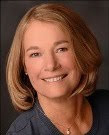
By Caitlin Rother

Paramedics found the body of Greg de Villers on the bedroom floor, surrounded by red rose petals, with a wedding photo of him and his wife, Kristin Rossum, propped up near his head. Rossum, a beautiful blonde and a talented toxicologist, told police her adoring husband was so depressed she was leaving him that he’d overdosed on some old pills she’d once used to come down after smoking crystal meth.

But authorities concluded that Rossum was to blame after they discovered those same drugs – as well as the powerful painkiller, fentanyl -- were missing from her lab at the San Diego County Medical Examiner’s Office. Rossum, they said, was scared her husband would expose her meth addiction and her affair with her married boss, so she used the tools of her trade to poison de Villers with a lethal cocktail of narcotics. The case was dubbed the “American Beauty murder” after the red rose by that name and, of course, Rossum’s favorite movie, “American Beauty.”

Years after Rossum was sentenced to life in prison without parole, she got a new appellate defense attorney, who, in turn, found a medical expert to cast doubt not only on the cause of death in this case, but to raise fascinating forensic questions about the role of fentanyl and her conviction as well. The recent traction her appeal got from the Ninth Circuit Court of Appeals gave me the impetus to add twenty pages about these and other new developments to my book on the case, POISONED LOVE. The updated and revised edition officially goes on sale nationwide on Tuesday, December 6.

The new expert, Dr. Steven Richeimer, claimed that Rossum’s trial attorneys did not put on a good case back in 2002, and that the defense’s argument that de Villers ingested the fentanyl to commit suicide made no sense in light of the inherently conflicting medical evidence: de Villers’s body contained enormous amounts of fentanyl – a fast-acting narcotic that is 100 times stronger than morphine – and yet he took six to twelve hours to die. More importantly, the doctor contended, the prosecution’s argument that the drug was given to de Villers through multiple administrations over a period of time didn’t make sense either.

Richeimer’s new theory: contamination of the autopsy samples, accidentally or on purpose. In 2010, the Ninth Circuit Court of Appeals granted the defense’s request to retest those samples for fentanyl metabolites, to see if the drug got into de Villers’s system before or after death.

The appeal is still pending before the Ninth Circuit. Although the Attorney General’s Office won the latest round to stop Rossum from retesting those autopsy samples, Rossum and her attorney haven’t given up yet. Perhaps they have taken a cue from the case of Cynthia Sommer, who was ultimately acquitted after her husband’s autopsy specimens were retested and found to contain no arsenic after all.

Kristin Rossum had everything going for her: Beauty, brains, and the start of a brilliant career in toxicology. But in November 2000, Rossum, the daughter of two accomplished academics from Claremont, Calif., was torn between three relationships: one with her husband, one with her boss, and one with crystal meth, a very close old friend with whom she’d become recently reacquainted.

The 24-year-old toxicologist had kicked meth a few years earlier with the help of her husband, the son of a French plastic surgeon. After reluctantly agreeing to wed de Villers, she was already regretting her decision six months later. He was clingy. She felt suffocated. He wanted to start a family; she wanted to pursue her career.

Then Rossum found a way out. She fell in love with Michael Robertson, her hunky Australian boss, who was also in an unfulfilling marriage. The lovers snuck away for sex at lunch and wrote each other sappy cards and e-mails, fantasizing about having children and spending the rest of their lives together. “You are my destiny,” they told each other.


Torn over what to do, Rossum started using meth again. She told de Villers she was going to move out. They argued, and he threatened to report her affair and drug use to her superiors.

On the night of November 6, 2000, she called 911 to report finding her husband in bed – cold, pale and not breathing. The dispatcher told her to pull him onto the floor and start CPR. Rossum later police that when she pulled back the covers, she saw red rose petals all over his chest and their wedding photo tucked under his pillow. Despondent she was leaving him, he must have committed suicide, she said.

The police initially believed her story until the incriminating evidence began to mount. First, they learned of her affair. Then, after toxicology tests were done by an outside lab, which found that de Villers had several drugs in his system, the cause of death was ruled as acute fentanyl intoxication.

Rossum was charged with murder after fentanyl, meth and other drugs found in de Villers’ body were discovered missing from her lab. Prosecutors described Robertson as her “unindicted co-conspirator,” and despite a police investigation into his involvement, he still has not been charged. A jury found Rossum guilty of murder, with the special circumstances of using poison, in November 2002, and she was sent to prison for the rest of her life.

POISONED LOVE explores the psychological aspects of this complex case, revealing details about the investigation and major players that had never been disclosed to the public. The book also includes excerpts of e-mails, diary entries, letters and other court evidence that lend insights into Rossum’s character, illustrating how an obsession for passion, a fatal attraction to crystal meth, and easy access to dangerous narcotics can lead to murder. This cautionary tale shows how a powerful drug addiction, coupled with such a crime, can destroy not just one life but many others in the process.

I hope you can join me at one of the talks and signings I’ll be doing about this book and my first thriller, NAKED ADDICTION, which is also set in La Jolla. I’ll be at Barnes & Noble in Oceanside (Dec. 13), Warwick’s in La Jolla (Dec. 18), Bookstar across from UTC (Jan. 6), Bay Books in Coronado (Jan. 13), and the La Jolla Riford public library (Feb. 1). Please visit my website for updates and more details: http://caitlinrother.com/events.html.

Caitlin Rother, a Pulitzer-nominee who worked as a investigativer reporter for nearly 20 years, is the author or co-author of seven books: Poisoned Love, Deadly Devotion/Where Hope Begins, My Life, Deleted, Body Parts, Twisted Triangle, Naked Addiction, and her latest book, Dead Reckoning. Coming next is Lost Girls, about the murder of innocents Chelsea King and Amber Dubois by sexual predator John Gardner. For more information, please check out her website, http://caitlinrother.com.

Friday, November 25, 2011

Happy Black Friday

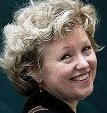
by Margaret Dilloway


The other day, I told my 6-year-old daughter that she had a playdate the day after Thanksgiving.

“On Black Friday?” she asked.

Doh. How did she know about Black Friday? How can she not? Even if she couldn’t read, there are Black Friday commercials on all the time. Spend, save, spend.

I have mixed feelings about Black Friday.

My father worked in retail. Christmas season made us or broke us as a family. If people were willing to spend money on jewelry, our Christmas and a part of the year would be comfortable. If the retail season tanked, so did we. So one part of me, remembering this, hopes that people will spend money on gifts to support all the people in retail.

But another part of me thinks Christmas is a black hole of consumerism. After all, I am now a (admittedly kind of sporadic) church-attending Catholic. Christmas is supposed to be a time to reflect on the birth of Christ and all that this means. To spend time with beloved family and friends. Not to run out and buy essentially useless consumer goods.

What good does stuff do you in the end? In the past ten years, we have helped move three elderly relatives out of their homes. This involved having estate sales and garage sales and getting rid of every accoutrement they have accumulated throughout their lives. Boxes of collectibles, years unseen in garages, now had to be disposed of. While I went through innumerable vases and tea cups and assigned price tags, I thought about how much time it had taken to accumulate these possessions, and how, near the end of their lives’ journeys, these objects that seemed so precious were just dust-collectors. How all those hours of collecting and purchasing didn’t matter now.

In 2009, my husband lost his job, due to the trickle-down effect of a mini-Madoff criminal. The only job he could find was in Honolulu. But the move required that we get rid of almost everything. All the possessions that we had acquired through more than a decade (and three children) together. The very idea almost crippled the plan. I considered not moving to Hawaii because it required so much sacrifice, but I felt it would be stupid to not move just because I was overly attached to material possessions. Plus, as anyone in this position can tell you, a job is a job, and you go where you have to.

One of the toys we got rid of was a pink wooden Costco play kitchen set we had bought for our youngest daughter for Christmas one year. My husband had driven to Indio, out in the desert, to get the very last set they had in stock. At the time, it seemed important that she get the kitchen set for Christmas. She did enjoy playing with it. But eventually she ignored it. And then, when we moved to Hawaii, we had to get rid of that kitchen set, and I wondered why I had been so worried about buying it in the first place.

What I’m trying to say is, all Christmas season long, we spin on this hamster wheel of consumerism. Driving like madmen from one place to another, searching for the gift that will make our kids immeasurably happy, save the relationship, show our love. Spending money that is often theoretical, put on credit cards. Does the end justify the means?

I am beginning to think it does not.

Whether we have to move into assisted living, have to move across an ocean, or have a house burn down, all those things we slaved to get become all they are meant to be: inanimate objects without meaning. Junk that needs to be given away.

Not that having material things is useless.. When we moved to Hawaii (and then back, eighteen months later) not having the basics of creature comforts sucked, to put it inelegantly. Sleeping on the floor, eating off paper plates, spending every bit of extra money to buy the essentials while forgoing grocery items like milk, wasn’t a fun time.

But now that this is more than a year in the past, I remember that discomfort less than the fact that we went through a bad time together, bereft of material possessions, and came through it okay. I like to think that this experience taught the kids we don’t need to have a lot of stuff, a lot of things, to be happy and creative.

You know that movie, A Christmas Story? It’s one of my favorites. In the film, young Ralphie wants a Red Rider BB gun. But the movie’s not just about the big moment on Christmas morning. It’s about all the other stuff that happens around Christmas. Visiting crazy Santa. Fighting a bully. Getting a Christmas tree. The leg lamp. The dogs eating the turkey. Eating out at a Chinese place.

It’s not about the stuff, it’s about all the other events. The people, the funny stories. The experiences.

It only took me about 35 years to learn this. As a kid, I don’t remember much about my family’s Christmases, beyond what I got. We didn’t go to church, or out to look at lights, have friends over, go to parties or play games. It was all about the gifts and the decorations. So when those material things didn’t happen, Christmas lost its luster.

But when I remember the Christmas we spent in Hawaii, I can’t tell you what the kids got. It was modest. What we all remember is going to the uber-crowded Honolulu lights parade, eating Christmas Eve dinner sandwiches on the beach, driving up a big hill to look at newspaper-advertised lights that turned out to be pitiful.

My intent isn’t to tell people not to go shopping on Black Friday (like I could change anyone’s mind anyway). It’s to say this: if you don’t go shopping, if you don’t stand in line for eight hours to get your child a reduced-price scooter or your husband a big-screen TV, it won’t matter. Build the memories more than the objects, and you’ll never have a bad holiday, no matter how much the economy collapses.

Friday, November 18, 2011

Words of Thanks


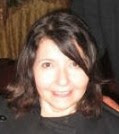
by Susan McBeth
On the first day of Thanksgiving week, I give thanks to William Shakespeare for teaching me the beauty, complexity, humor, and expanse of the English language.  As a writer, I can think of no greater gift.

On the second day of Thanksgiving week, I give thanks to W.G. Sebald, a brilliant German writer who tragically died before his time in an automobile accident, whose works have spoken to me in a way that have helped me better understand the complex nature of survivors in history and , thus, my own roots.

On the third day of Thanksgiving week, I give thanks to Anne Morrow Lindbergh, who reminds this writer daily that “I began these pages for myself, in order to think out my own particular pattern of living, my own individual balance of life, work and human relationships.”  A copy of Gift from the Sea is a permanent fixture on my nightstand and offers a constant reminder to keep my shell simple and open at all times.

On the fourth day of Thanksgiving week, I give thanks to Harper Lee, for teaching me that every life is a story, and those stories are dictated by our choices.  She reminds me daily to think thru the consequences of making the right, and wrong choices, in life.

On the fifth day of Thanksgiving week, I give thanks to Ayn Rand for teaching me the capability of the human mind and what we can all accomplish when we challenge our potential and utilize our own unique gifts

On the sixth day of Thanksgiving week, I give thanks to John Steinbeck for reminding me that we must never forget our humanity.  I can think of no other writer to date whose poignant words touched me so deeply that I carry an ingrained image of them in my brain on a daily basis.

On Thanksgiving Day, I close out the week and give thanks to Yann Martel for offering the gift of hope, and the reminder that we must all co-exist, despite our struggles.  I hope for the day when we can, in fact, give thanks that we indeed have achieved a peaceful co-existence.

 I wish to close by giving special thanks to my fellow San Diego Writing Women, who, thru their support, encouragement, and unique talents, have all offered me gifts of their own, and I thankfully accept and gratefully acknowledge their value in my life. 

Friday, November 11, 2011

Priority

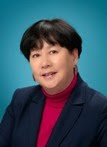
By Marjorie Hart

Do you have a problem with priorities? Years ago, there was no such thing as we know it today—priority was an unknown word. No lists, no two-year calendar, no cell phone and no one to remind you, “Are you finished yet?”

Now, having a priority is essential before a cup of coffee though I wonder at its usefulness. If I start the day with music, I know I should be writing, If I’m writing, I should be practicing. Let’s add an emotional element—guilt. Do we need more guilt? I looked back at my childhood for a clue.

When I grew up there was music every day: morning, noon and night. Even in those bitter Iowa mornings which were so cold the frost covered the wallpaper, I’d dash to the kitchen and huddle next to the black iron range where my sister was practicing her violin. Each morning, it was hot cocoa with Czerny violin exercises. In the afternoon, mother’s piano pupils would line up and I’d hear so many versions of Bach’s Well Tempered Clavichord, I could hum them in my sleep. At night, mother lulled us asleep playing the plaintive C Major Brahms Intermezzo. Its haunting melody and the memory can still bring me to tears.

My father had other interests—he loved books and poetry and could dramatically recite The Raven to visiting company, or show me the exotic countries in the National Geographic. My first encounter with Tiffany was their glittering ad on the first page. When we walked in the woods, he kept Audubon’s book of birds in his coat pocket to spot a new wood thrush. But my favorite was the mosquito-net tent he brought from Hawaii during WWI. He pitched it in the back yard, between a lilac bush and the purple-martin bird house. When I crawled in, it became a gauzy-white palace where I could see out, but no one could see in. There I would read or write by the hour, oblivious to the call for dinner.

Did my parents have priorities? They got up each day and did what they had to do as an integral part of their lives, without a list, a calendar, a car, or a complaint.

But I’m still looking for my priority. Shall I practice for a concert or finish my writing?

Friday, November 4, 2011

The Earth Is Round


We hear “It’s a small world” all the time, but I prefer my old Persian expression that says, “The Earth is round, we never know when we’ll meet again!” Maybe what I enjoy is its optimism, or the indication to an active world rather than one that’s shrinking in size. I recently came to experience this dynamic wave and realized how truly connected people are.

Years ago, I read Digging to America by Ann Tyler and wrote a review on it for The Iranian. Months later, I received a sweet letter from two ladies in New Jersey. Prior to conducting a book club session regarding the above book, they had decided that since parts of the novel involved Iranian characters and culture, they should look up a review by an Iranian writer and, as luck would have it, found my article. Their flattering remarks complimented me on my review and in the end they expressed interest to read more of my work and to be notified about my upcoming novel. We exchanged pleasantries and I promised to be in touch.

Four years went by and I became so absorbed in my work that I lost track. Two weeks into the launch of my novel, I received another e-mail from one of those ladies. I was deeply touched to learn that she had followed my articles and now wanted me to provide copies of my new novel for a NY bookstore, where she now worked. A year has gone by and I still can’t put a face to her name, but in my mind, she has earned an angelic image.

To date, The Blue Door Books in Cedarhurst NY has single handedly sold more copies of my Sky of Red Poppies than any other vendor - excluding Amazon, not to mention arranging several book club discussions by phone. I wouldn’t be surprised if by now the people in Cedarhurst know me better than San Diegans do! This is no longer just business because such connections convince me that I’m on the right path and generate the energy I need to go on.

So, if you happen to pass through Cedarhurst NY, stop by The Blue Door Books and visit the people who don’t just provide books, but deeply care about their clients. Good recommendations are why we all became readers and receiving such care is what makes independent bookstores irreplaceable.