Tuesday, January 10, 2012

Revising. Again. And Then Again.

Kathleen B. Jones

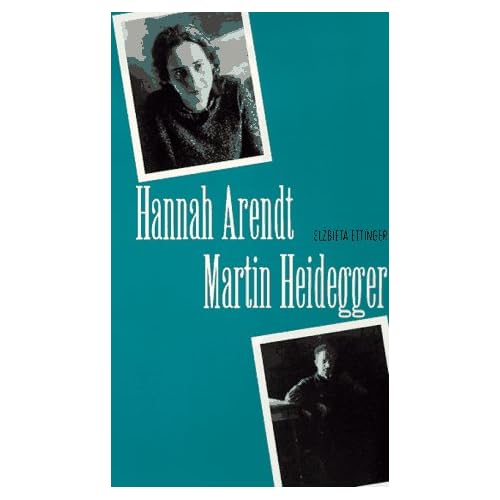
A few months ago I spent some time in the archives of Elzbieta Ettinger, author of Hannah Arendt and Martin Heidegger, a book about the intimate relationship between Arendt, a Jewish woman who write about totalitarianism and the Holocaust, and Heidegger, who had once been her teacher and who later became a member of the Nazi party. When it was published, Ettinger’s book caused a scandal in the world of Arendt scholars and set off a debate almost as heated as the affair itself had created when it first became publicly known. How could Arendt have become involved with such a man? More to the point, how could she have rekindled a friendship with him long after the war had ended?

Since I have been working on a memoir (Diving for Pearls: A Thinking Journey with Hannah Arendt) that tracks Arendt’s influence in my own life and thinking, taking up, among other subjects, the meaning this affair had in Arendt’s life, and what it has made me think about my own life, I was familiar with, and critical of, Ettinger’s interpretation of the event. I also knew that Ettinger had intended to write a fuller biography of Arendt. But, for various reasons, she had separated out the Arendt/Heidegger story, publishing it in a short book. She never completed the longer biography. So when I learned of the availability of Ettinger’s archives I wondered whether anything else she might have discovered in her research would prove valuable for the book on which I was still working.

It turns out that the trip I made this past fall to the Schlesinger Library of Harvard University, where the Ettinger archives are housed, was both a boon and a burden. What I uncovered in the archives is invaluable to my work. Interviews, letters, and other materials Ettinger gathered from those who knew Arendt will help me craft a more fully realized portrait of the person Hannah Arendt, who assumes the role of interlocutor in my memoir. But such bounty also proves a burden.

A few months earlier, thinking I was near the end of the revision process, I had determined to pursue self-publishing the manuscript in its then current form. But the wealth of materials I have just added to my ever-expanding research files has forced me to confront the difficult question of how these new documents might reshape my manuscript.

Part of the joy of writing is what you discover about what you really want to say in the process of revision. Searching for exactly the right phrase and precisely the correct shape for a paragraph you begin to uncover what you have been trying to say all along. My immersion of the Ettinger archives has brought me face to face with this process in the work of another. Reading through several drafts of her unpublished work, and comparing these drafts with the research materials she used to create her work, I could literally see the author’s formation of her subject, watch her confront her resistance to an interpretation of her subject at odds with her own, and discover the places where she resolved to draw her own conclusions.

So, I am taking a deep breath and diving back into my manuscript again, convinced that the changes I will make will add depth to my story without fundamentally altering its shape. And since the story I am trying to tell is about the thinking relationship I have had for nearly thirty years now with Hannah Arendt, a woman long dead but one who has become even more alive to me now as a provocative, yet irksome, companion, whose life and work continue to make me think and rethink, write and revise my own, revising my manuscript one more time seems fitting. I do hope, though, it will be the last!

For more about my work visit my web site.

Saturday, December 31, 2011

“We Live Therefore We Write.” Really?

The Question
“How did you get started writing?” 
Every professional writer fields this question with some regularity.   Of course, fewer people ask “How did you get started in medicine?” Or “How did you begin as a software engineer?” They don’t ask because most people more or less know the answer. You go to school, you intern, you move into an entry level position, and you work up from there. 
Writing for a living is a more mystifying process, it seems. It is somewhat akin to being an artist, an actor, a musician, or a filmmaker. People may take all the right steps but some find themselves working in a large public arena and some don’t.  In fact, a high percentage don’t, far higher than software engineers that’s for sure.
I meandered down this path of thinking when I took a second look at San Diego Writing Women’s tagline: “We live therefore we write.”
We came up with this slogan at one of our earliest meetings.  It sat well enough with the group that we stuck with it. For me, it perfectly summed up my feelings about my editorial career.
Writing always came naturally to me.   As a child, I used it to re-envision my family into the parental unit of my dreams. In high school, I leapt at any writing assignment involving descriptions –of people on the street, how it felt to step inside a cave (even though I had never been in cave), the desk in front of me, the pen in my hand, whatever.   It didn’t matter if I had only glimpsed the person or if the object was completely inanimate, I was more than happy to imbue them with all types of emotion, mystery and romance.  All I needed was a starting point and my imagination took it from there.
 In college, while studying mass media as mass culture, I composed critiques and analysis of photography, film, and finally, my greatest area of interest, music.

My Answer
My love for music and writing coalesced out of a combination of determination, desire, and the need to meet my rent.  In the summer before my last year of graduate school, my funds were exhausted. I was living on a research and graduate assistant stipend.  The student employment services offered me a three month “communications consultant” position for a social service agency that actually paid pretty well.  But I shook my head no. I was going to work in media this summer–even if I had to starve to death.
I called the community weekly newspaper the first week in June. They put me on the political beat covering local candidates running for election.  They paid $20 an article. That same week, one of my favorite musical artists, Roxy Music, was performing in town.  No way could I afford to buy a ticket. So I suggested that I review the concert. The paper agreed and paid me $15 as well. In three weeks, I reviewed three concerts and covered three local candidates. Great for attending the concerts I wanted to see. Not so great for income.
July rent was looming.
Eager for more story opportunities, I decided to attend a free concert called Rock Against Racism in Chicago. I could combine political issues and music in this article, I thought. I hopped a ride with friends, reviewed the performances and interviewed people in the crowd. I had the story but no outlet.
 It was now July 1.
I wracked my brain. Who might be interested in a story with this kind of scope? I picked up the phone and asked for the editor who oversaw the music coverage at The Milwaukee Journal, the major daily paper in Wisconsin. At the time, it ranked among the Top 10 newspapers in the U.S. I got the editor on the phone and pitched him hard on what I thought was this great story. I heard a sigh at the other end.
“We are not interested in a concert that happened in Chicago two days ago,” he said. “But look, we are always looking for a backburner reviewer. Do you review rock concerts?”
Yes! Yes, I do, I pronounced. The editor told me to send him three sample concert reviews.  That was perfect because all I had written were the three concert reviews. I got a trial assignment and three weeks later the paper’s regular rock critic decided to leave. By the end of that summer, I was ensconced in a big time journalism career, which later included seven years at The San Diego Union. From there, I wrote full time for national magazines, then for major internet outlets, and now for books. 
So, yes, I went to school, started at the entry level and worked my way up from there. Except for me, my career launch happened in a very condensed period of time. And all my efforts could have gone nowhere. The community newspaper may not have wanted rock concert reviews; The day I had the chutzpah/desperation to call the The Milwaukee Journal might have been the day the editor was on vacation. I could go on about all the opportunities that came my way that could have detoured.
I always said my career as a writer found me rather than vice versa. Something was magical in the circumstances around it: Something that said “Hey kid, this time around, you get to write.”
As the big 2012 new year debuts, I like recalling that destiny always meets us more than halfway.
I live, therefore I write? Really.

DIVINA INFUSINO is the author of Day Trips From Orange County, an often personalized account of Southern California’s iconic and idiosyncratic locales, natural and cultural sites, hotels, spas, shopping areas and restaurants. She is also a co-author of The Love Response and Rock Gods. She has developed and consulted on numerous books over the past eight years, including those by bestselling self-help author Debbie Ford and wellness author Dr. Ellen Cutler. Divina has worked as a staff entertainment writer for The Milwaukee Journal and The San Diego Union, was a cultural commentator for KPBS Radio, and has also been published inRolling Stone, The Economist, TV Guide, Entertainment Weekly, The Los Angeles Times, Reuters,The New York Times Syndicate, Harper’s Bazaar, Salon.com, and HuffingtonPost.com. Among her celebrity interview subjects are Madonna, Julia Roberts, Bono, Bob Dylan, George Harrison, Deepak Chopra, Robert Redford, Tom Hanks, Kate Bosworth, Stephen Covey, Norman Mailer, Bishop Desmond Tutu, and Keith Richards. She earned her bachelor’s in English and Communications from Marquette University and a master’s in mass media analysis from the University of Wisconsin.

Monday, December 26, 2011

Permission to Dream, a Day to Creatively Re-energize


By Caitlin Rother

Today is a federal holiday, a day that if I were still at the newspaper, I’d probably spend cleaning my desk, writing emails to people who weren’t at work and could read upon their return, chatting with colleagues about their holiday, and playing around with Google to brainstorm new story ideas. A day, in other words, to catch up and yet be ready if anything big should break. Holiday staffs were small even in those days, so I might have been called in to help the cops reporter cover a murder, but chances were that I would end up with a nice relaxing day and still earn a paycheck.

But now that I’m out of the breaking news biz and I’m my own boss, it is now up to me to spend this day working (or not), without any promise of pay. As such, I have decided to use my Boxing Day “holiday” to come up with some concrete goals, but also to give myself a chance to dream, trying not to limit myself by saying, “No, that will never happen.” As I’m writing this, I feel in my gut that I didn’t go far enough in my journal this morning. I feel the need to go back in and dream even bigger.

For the inspiration to carry out this endeavor, which I do at least annually but always around this time, I want to thank my good friend Samuel Autman, who some years back sent me the book, “Write it Down, Make it Happen,” by Henriette Anne Klauser. Even if you don’t read the book, I encourage you to try this exercise. It’s fun and it works for me. Two hours ago I felt like I had an insurmountable stretch of endless tasks ahead of me, and I now feel a hope, an optimism, and a renewed sense of creative energy that will last me throughout the day and into this week if not longer. Last year or the year before, I can’t remember, I put down, “I want to make the New York Times bestseller list” and this year it happened.

Here’s how I do it: I start with a cappuccino and a list of small, do-able goals for the very near future. From there, I move on to the bigger goals, and then I hatch some dreams, both foreseeable and off the charts. I start each sentence with language such as “I would like…” or “I want” or “It would be nice if” or “I’d love to have the opportunity to.”

What I didn’t do today, but have done previously, is to actually visualize one of those dreams or goals into a scene with characters and dialogue and watch it come true as it happens in present tense and in real time (thank you Ms. Klauser for that one). I not only do this in my journal, but I also have used it in my creative writing classes. My students said they really enjoyed it, even writing to me months later with news of something that happened that they wouldn’t have noticed or appreciated if they hadn’t done this exercise.

Now that I’ve done all that (and written this blog post – i.e. share what you’ve learned to help others is also something I picked up along the way) I’ve given myself the rest of this day to spend on creative “work.” To re-energize the batteries and feel like my holiday isn’t over quite yet. First up will be to add some new details to my novel in progress, which were inspired by a couple of movies I watched this weekend. If I feel like it, perhaps then I’ll make some updates to my website that need to be done, but don’t have to be done today. And maybe, if I feel the urge, I’ll do some more dusting and organizing in my office so my body and my brain have the room to breathe and be more efficient in the coming year.

Today, I gave myself the permission to dream and to feel the joy that makes this writing life so full. I still have those many tasks ahead of me, but I have given myself permission to save the harder, more challenging work for later in the week, knowing that I will feel more willing and able to tackle the world and handle the challenges life throws at me.

Onward!

Caitlin Rother, a Pulitzer-nominee who worked as a investigativer reporter for nearly 20 years, is the author or co-author of seven books: Poisoned Love, Deadly Devotion/Where Hope Begins, My Life, Deleted, Body Parts, Twisted Triangle, Naked Addiction, and her latest book, Dead Reckoning. Coming next is Lost Girls, about the murder of innocents Chelsea King and Amber Dubois by sexual predator John Gardner. For more information, please check out her website, http://caitlinrother.com.


Monday, December 19, 2011

The Gift of Story: Priceless


By Georgeanne Irvine

The greatest gift I’ve received in a long, long time is a story my older sister, Ginger Barnard, wrote about me when I was a 4-year-old wild child. She rediscovered it last month while we were cleaning out nearly 50 years of memories from the house of our 93-year-old mother, who recently moved into an assisted living home.

Ginger was so excited when she found her story that she called me to read it over the phone and then retyped it to send to my siblings and me by email with the following note:

“The attachment is my retyping of a story I wrote for Honors English in December 1959. It was in a notebook of work from my class that I found at Mom’s house last weekend. I was going to chuck it until I started reading the essays and stories that I had written. Some pretty interesting stuff. This piece made me laugh out loud. It is/was all true.”

Her story made me laugh, too, and whisked me back to my childhood, when life was as simple as making mudcakes and riding tricycles. I am sharing her “Just Like Daddy” in hopes that it will inspire you to keep track of your own precious memories. They will be an extraordinary gift of love for your family and friends many years from now. And by the way, my sister is right—everything she wrote about me is true!

Just Like Daddy

This has been retyped from a paper written on December 4, 1959, by Virginia Irvine, aged 16, for Honors English at Crawford High School, San Diego, California. An “A” grade was earned. This version includes the corrections made by Miss Florence Eaton, Honors English teacher. Ginger Irvine Barnard (aka Virginia), November 7, 2011.

It was a peaceful Saturday morning on a San Diego, California, street. The warmth of the sun was removing the last dew from the grass. There was no activity on this particular street until one front door opened at approximately 8:00. A relatively clean-faced, Dutch-bobbed four-year-old appeared on the threshold. Every Saturday morning this same front door opened at the same time and the same child emerged.

At first glance a passing stranger might question the sex of the child because other than the haircut there was no distinguishing identification. The child was dressed in a Grand Canyon T-shirt, boys’ blue jeans, ragged navy blue tennis shoes, and one red sock and one white sock. To further add to the confusion of “its” gender, a voice from inside shrieked, “Georgie, come and eat your eggs!” To this the child replied rather belligerently, “Don’t like dirty, dumb eggs.” The second shout from the house confirmed Georgie’s identity. Georgeanne, if you don’t come and eat your eggs—NO CARTOONS today!”

With this threat hanging over her head, Georgeanne “Bratenella” Irvine skipped down the front steps singing “Popeye the Sailor Man.” “Bratenella” was a name added by her two older sisters, who consider her quite a nuisance.

Georgeanne walked into the garage and picked up her wheelbarrow and shovel that were “just like Daddy’s” and marched out of the garage “just like Daddy.” The neighbors call her “Big George’s sidekick.” Often Georgeanne can be heard cackling over the fact that even her name was “just like Daddy’s.”

With a passion Georgeanne hates dresses, dolls, and ruffles. Like everything else she doesn’t like, dresses, dolls, and ruffles are “dumb and dirty.” When her mother suggested hanging pictures of ballet dancers in Georgeanne’s purposefully feminine bedroom, Georgeanne had a fit and insisted that horses and dinosaurs would be much better.

Animals are her big love. She sleeps with seven of them. Horsie is the leader of the gang and takes the blame for any or all of Georgie’s numerous misdeeds. There are three “rabbies” of assorted sizes and colors, a large green dinosaur, a penguin, and finally Elli Phant. Another old standby is Pinky-by, a ragged remnant of a blanket, left over from babyhood. Pinky and all of the animals are gifted with the power of speech, which only Georgie can hear.

For a four-year-old, Georgeanne has a long attention span. She will work an entire day helping her father put in the new lawn. Coloring books and TV occupy hours of her playtime. Cartoons and cowboys are TV favorites. She has the commercials of all the cartoon shows memorized. Captain “Roo,” Annie “Oakless,” and Huckleberry Hound are her “berry favert shows.”

The threat of no cartoons was in the back of her mind at approximately 8:05 that same Saturday morning because she had just broken all her previous records for getting dirty. Five changes of clothes in one day are not unusual for Georgeanne.

By 8:10 a.m. the neighbors on that once quiet street were no longer sleeping. Georgeanne had dropped her shovel in her wheelbarrow twice, hit the car once, fallen flat on her face, and demonstrated her famous foghorn cry.

The rest of the day was smooth sailing, if you do not take in consideration the usual spilled milk, slammed doors, and spankings. At bedtime the ruckus began all over again. The first faux pas she made was to steal one of her big sister’s high heels and a stocking and hide them in a closet. Immediately the big sister began running down the hall after the culprit and shouting at the top of her voice, “Stop! Give me my shoe. I’m going to be late. You little brat, where did you put my shoe?” and finally, “MOTHER, will you do something with this little monster! It’s way past her bedtime.”

The fatal mistake had been made. Her presence had been noticed and the time had been noticed. Before going to bed she always takes a bath. Bath time means fun time for Georgeanne because sometimes she is forgotten and then she can flood the bathroom.

After a long struggle the little monster is put to bed with all her animals. Her mother tried to explain to her about saying her prayers. After a careful explanation that God was her Heavenly Father and watched over and took care of her all the time, Georgeanne popped up with the sixty-four-dollar question. “Then why do I have to have baby-sitters?”

With that closing remark, Georgeanne “Bratenella” Irvine drifted into nitey-nite land. Tomorrow was Sunday and that meant the funny papers came in the morning and that meant she’d have to get up at six to get the paper first. Of course she can’t read but the funnies are a good excuse to get up early. After all, you’re only young once.

San Diego native Georgeanne Irvine has devoted more than three decades of her career to raising awareness about animals and wildlife conservation. By day, she is associate director of development communications for the San Diego Zoo, where she has worked for 33 years. George is also the author of more than 20 children’s books, plus numerous magazine, newspaper, and Web articles. George’s most recent work is the coffee table book, The Katrina Dolphins: One-Way Ticket to Paradise, which is a true story about 8 dolphins from an oceanarium that were washed out to sea during Hurricane Katrina in 2005 and dramatically rescued a few weeks later.

Friday, December 9, 2011

Things That Go "Bump" in the Day


by Laurel Corona
One time when I was growing up, my sister and I, newly old enough to stay home alone for a few hours, were “terrorized” after dark by a neighbor on the front porch dropping off something he had borrowed from my dad. We stayed huddled in the bathroom for what seemed like an eternity until our parents got home, arming ourselves only with a flashlight we planned by some childish logic to defend ourselves with if the intruder broke down the door.
At least there really was a presence outside--unlike later, when I would cower in bed after watching a scary movie, convinced that whatever had menaced the characters was about to get me.  Why is it that the typical and familiar “things that go ‘bump’ in the night” are transformed into something diabolical just by the act of storytelling?  Try as one might to rationalize that watching a movie does not compromise one’s safety in the real world, that a monster or psychopath isn’t lurking out there ready to pounce on the hapless soul with the misfortune to have just watched something scary, it just never seems to keep the fears at bay.
There’s something equally irrational about writing under the kind of personal stress I have been facing since my partner, Jim, was diagnosed with metastatic prostate cancer.  I was finishing the first draft of a new novel as the news was unfolding, and it has caused me to look at my work with some of the same fears--fears that try as I may, I cannot dispel with logic, or a heroically wielded flashlight.
I don’t know whether to trust my writing anymore. We’re talking about words written before I even knew Jim was ill, so it’s not like I could have been shellshocked as I typed.  I remind myself that the manuscript hasn’t changed just because other things have, but somehow I feel more vulnerable and confused, more doubting of my ability to judge.   
What’s weird is that I can’t figure out what I am worried about. There’s nothing about my writing future that is at stake here. I don’t have a deadline looming.  I don’t depend on the income (thank goodness!) With three published novels, I don’t have any goal I haven’t already achieved.  I think my anxiety isn’t about my writing at all, really. It’s about the great unspeakable behind all this. The D word.  The one with five letters that rhymes with breath. 
 There’s another “D” word relevant here too: Displacement.  Maybe that’s what’s going on--I am acting out in one sphere what is freaking me out in another.
I tell myself that it is my choice whether to let the future ruin today.  Just live. Appreciate.  Be thankful. I’m hearing myself pretty well most of the time. It’s the bogeyman of uncertainty that’s got me.  What’s certain is that the man I love, with whom I have had one of the best chapters of my life, cannot be cured.  What’s certain is that, unless something unexpected takes him from me even sooner, the expected will take him soon enough. What’s uncertain is all the details. Will he be strong and enjoying his life a year from today? Two years?  How long until he wonders whether it’s worth it to soldier on? How long until I will be alone?
Yes, I know nothing is ever certain, and some kinds of uncertainty are good and even productive. Sometimes what we don’t know truly doesn’t hurt us.  This is not one of those times. At least I don’t think it is, unless the future is uglier than I think, and I’m not, repeat NOT, thinking that.

So I’m taking it out on my manuscript, wondering whether words--or events--will ever be the way I want them again. Writing is something I can control, though, at least a little, and even as I type this, I long to escape into it. Time to put down the flashlight and come out of the bathroom armed with nothing but a story. No need to utter a frightened “who’s there?”  It’s only me. And I don’t like any of this.  Not one bit.